
Paediatric standing aids
Children’s standing frames are essential assistive devices to support postural control and weight-bearing, aid in bone density development, and encourage participation in daily activities. From supine standers to prone standers, our frames are ideal for children, their families and therapists as they promote the child’s independence and overall quality of life.
Paediatric standers for upright, supine, prone, and dynamic standing positions
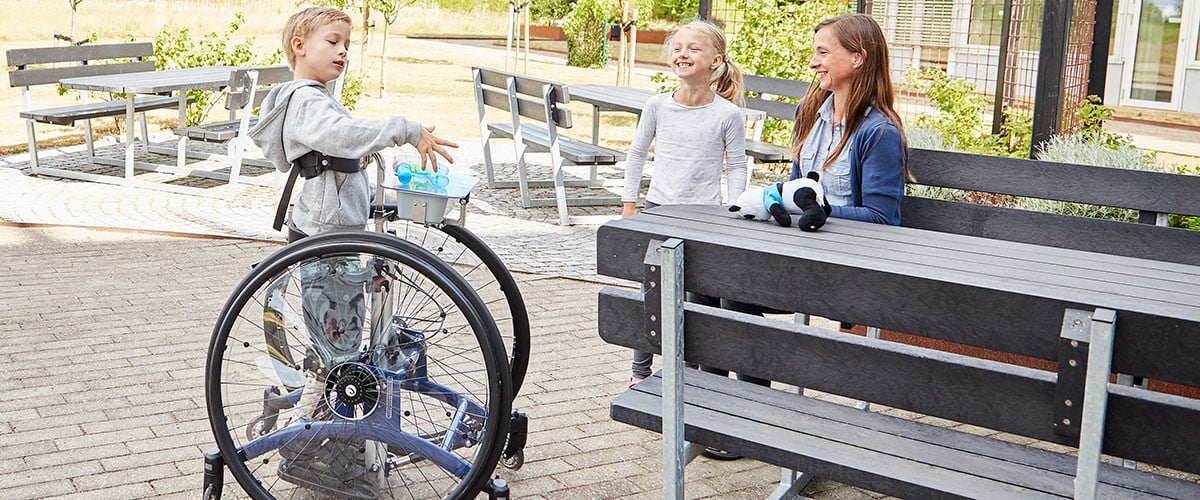
Enabling children to maintain a standing position lets them apply different loads on their bones, joints, and muscles, helping them develop new skills. Our assortment of standing frames offers upright, supine, and prone standing positions, dynamic standing with adjustable features for postural support, and the possibility of standing in abduction. Each mobile stander is made to meet the child's individual needs, providing optimal flexibility, ensuring safety, and promoting confidence.


Paediatric standing aids FAQ
A standing aid is supportive equipment designed to help children achieve and maintain a standing position safely. Standing aids are often used by children who require additional support for posture, balance or weight-bearing.
Choosing a standing aid depends on your child’s physical abilities, posture, support needs and therapy goals. It is also important to consider the preferred standing position, ease of transfers, adjustability and opportunities for participation during standing activities. A healthcare professional can help determine the most suitable standing solution.
Many standing aids are designed with adjustable supports, footplates, trays and height settings to accommodate growth over time. Regular adjustments and reviews can help ensure the standing aid continues to provide safe and effective support as your child develops.
Depending on the child’s individual needs and therapy goals, supported standing may support weight-bearing, joint and muscle flexibility, positioning, posture and participation. Standing can also provide opportunities for children to engage with peers and activities at eye level. The benefits of standing will vary depending on the child’s individual needs and therapy goals. A qualified healthcare professional should determine the appropriate standing programme.