
Seating enables participation
How sitting opens the door to everyday life
Adaptive seating gives children with functional impairments or mobility challenges the stability and postural support they need to join in, explore and grow
– at the table, in the classroom and everywhere in between.
Why do we sit?
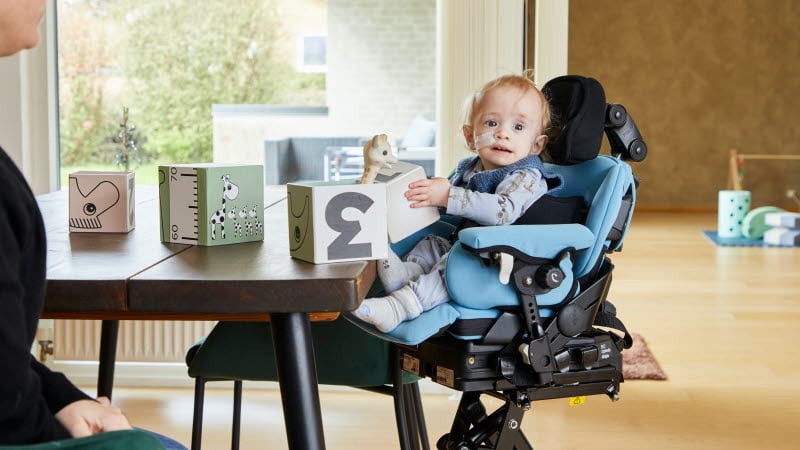
Sitting is something most of us take for granted. Yet a stable, well-supported seated position is the starting point for almost everything a child does during the day – eating a meal, playing with a sibling, following a lesson or simply looking a friend in the eye.
For children with functional impairments, achieving this position independently is not always possible. Without the right support, energy that could be spent on learning, playing or connecting with others is instead spent trying to stay upright. Adaptive seating removes this barrier. By providing stability at the pelvis, trunk and head, it frees a child to use their hands, communicate and focus their attention for the activity in front of them, rather than the effort of simply staying seated.
In this sense, seating is never just about posture. It is about participation – and participation is where development happens.
Access to assistive technology is a human right
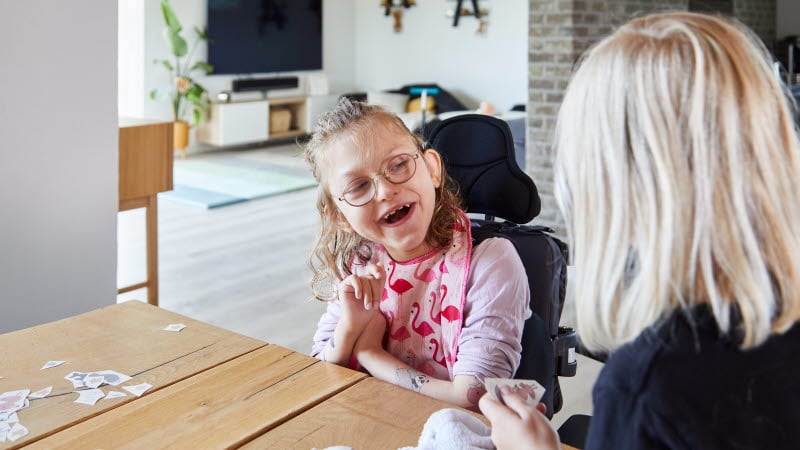
The right to participate fully in family, school and community life belongs to every child, regardless of their physical abilities. Access to appropriate assistive technology, including supportive seating, is recognised internationally as essential to upholding this right.
For a child who cannot sit unsupported, a well-fitted chair is not just a convenience. Every child has different needs and a good sitting position can be very varied depending on each child’s individual functional needs. If the seating position is not right for the child it can lead to increased fatigue, pain and ultimately reduced participation. The right sitting position is what makes it possible to sit at the family dinner table, to take part in a classroom activity or to be at eye level with friends during play. Providing this kind of support as an early or on-time intervention, and consistently, is an acknowledgement that every child deserves the chance to take part on equal terms.
A developmental perspective: supporting motor milestones
The first years of a child's life are a time of important and fast growth and development. During this period, children learn, explore, build relationships, and develop the skills that will support them throughout their lives. The experiences and opportunities they have in these early years can have a lasting impact on how they grow and participate in the world around them.
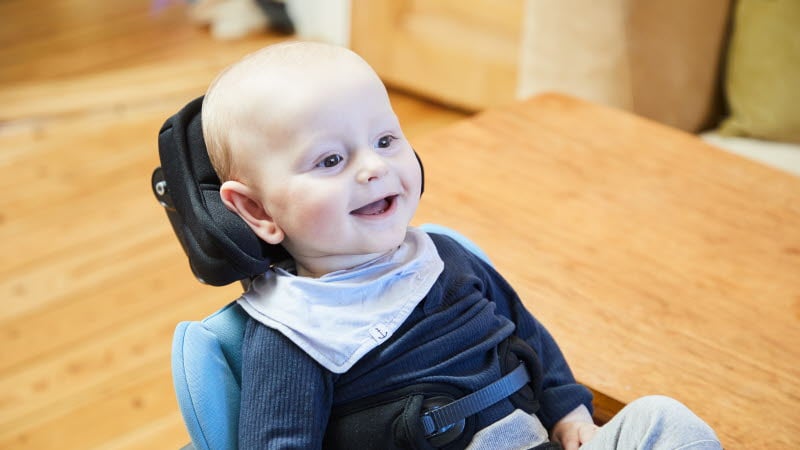
According to the World Health Organization (WHO) motor milestones, typically developing children start sitting independently around the age of 4 months. While it may look simple, sitting upright requires the body and brain to work together in a very complex way. Before a child can sit independently, they must learn how to control their head and trunk against gravity and make constant small adjustments to stay balanced. Generally motor development follows a broadly predictable sequence, with each new skill building on the postural control that came before it.
Children who are unable to reach these milestones independently, due to disability or delay, risk missing out on the experiences that typically follow – reaching, exploring, communicating and moving through their environment with growing confidence.
Assistive seating introduced early can help bridge this gap. By offering the right level of support at the right time, it allows a child to experience many of the same developmental opportunities as their peers: using their hands freely, engaging visually with the world around them and possibly build the postural foundations needed for later skills such as standing and walking. The earlier this support is introduced, the more a child's naturally adaptable, developing brain can make use of it.

Physical benefits: supporting the body's structure and function
An optimal postural support does far more than keep a child upright. It has a direct, measurable impact on several areas of physical health:
Postural alignment and hip health
Supportive seating helps to reduce asymmetries in the trunk and pelvis, which, left unaddressed, are linked to complications such as pain, windswept hip deformity and scoliosis. Good positioning also helps protect hip joint stability over time.
Breathing and digestion
An upright, well-aligned trunk allows the ribcage to expand more freely, supporting healthier breathing patterns. It can also aid digestion, as the internal organs are not compressed by a collapsed or asymmetrical posture.
Reduced muscle tightness
Stable, symmetrical positioning can help to minimise contractures and maintain range of motion, supporting comfort and function over the longer term.
A stable base for function
When a child does not need to concentrate on staying upright, their hands, eyes and attention are free for the task at hand, whether that is eating, drawing, playing or communicating.
Cognitive, social and emotional development
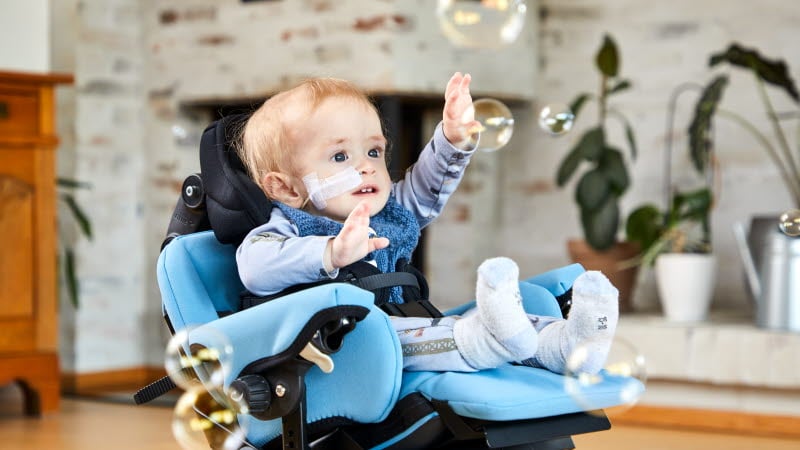
The benefits of supportive seating reach well beyond the body. Being seated stably and comfortably, ideally at eye level with peers and family members, changes how a child experiences and engages with the world around them.
Sitting securely can enable children to better focus their attention, follow a story, take part in a game or engage with a lesson, supporting cognitive development at every stage. Socially, a good seating position makes it easier to join conversations, share a meal or take part in group activities, fostering a sense of belonging rather than observation from the sidelines.
These moments of genuine participation matter for emotional wellbeing too. Confidence grows through small, repeated experiences of being included and capable. A child who can take part is a child who can build friendships, express their personality and develop a stronger sense of self.
Dynamic seating: when and why it matters
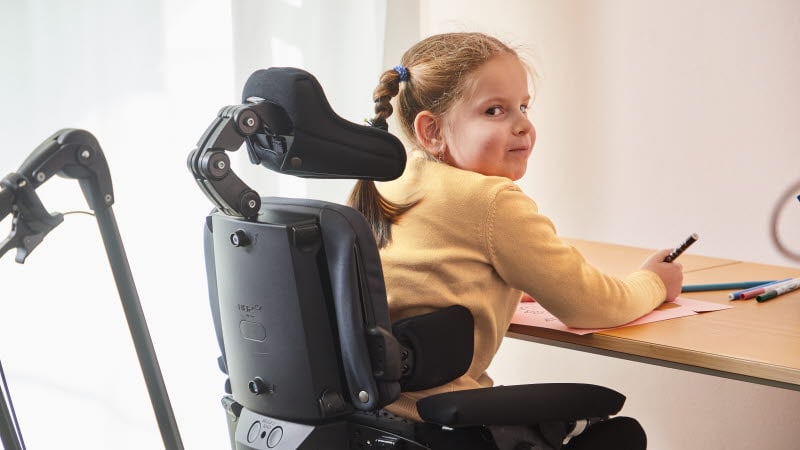
Not every child's body remains still, and seating should never fight against that. Some children present with extensor patterns, involuntary movements that push against a fixed, rigid seat, causing discomfort, instability and, over time, fatigue for both child and caregiver.
Dynamic seating is designed with this in mind. Rather than resisting movement outright, it allows controlled, supported motion at key points, absorbing extensor thrust while maintaining the child's overall position and safety. This can reduce the physical strain associated with constantly fighting a fixed frame, allowing the child to remain seated comfortably for longer, and to direct their energy towards the activity in front of them rather than the discomfort beneath them.
Dynamic seating is particularly valuable for children whose muscle tone or movement patterns change throughout the day, offering a solution that moves with the child rather than against them.
The impact on parents and caregivers
Caring for a child with complex physical needs is a full-time commitment, and the right seating solution can make a meaningful difference to daily life for the whole family.
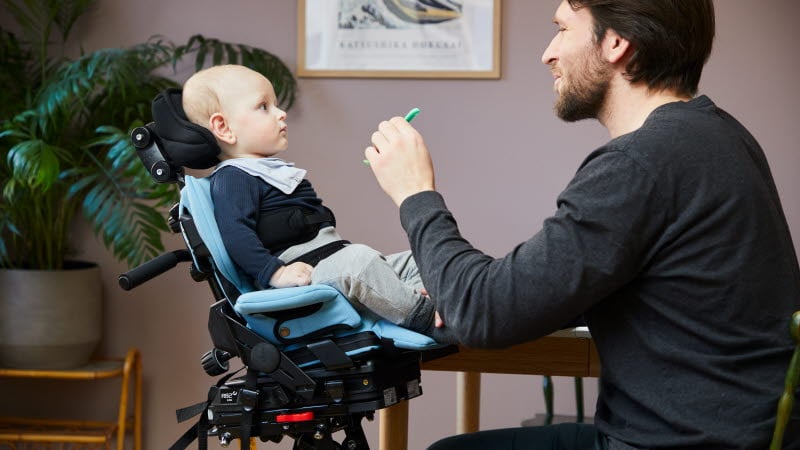
When a child is seated safely, comfortably and independently, caregivers gain valuable time and peace of mind. Mealtimes become calmer, transfers become easier, and everyday routines, from schoolwork to family gatherings, require less physical support and vigilance. This does not only ease the physical demands of caregiving; it also reduces the emotional and mental load that comes with constant repositioning, monitoring and troubleshooting discomfort.
Perhaps most importantly, when a child is able to participate more fully in family life, it changes the emotional tone of the household. Shared meals, games and outings become moments of connection rather than logistical challenges, easing stress for parents and siblings alike.
Give your child the support to take part
Every child deserves the chance to sit comfortably, engage fully and be part of the moments that matter, at home, at school and everywhere in between.
Explore our range of adaptive seating solutions and find the right fit for your child's needs.

