The height adjustment is probably the single most important feature of the High-low:xo. It allows the user to be positioned close to the floor or at table height and thus, be at eye-level with their peers or to join in at the dinner table with their family.

High-low:xo benefits
Height adjustment - three possibilities
The High-low:xo offers an adjustable seat height by use of either a gas spring, a powered actuator or hydraulic system. The three different systems provide similar overall clinical benefits for the user and their caregivers. However, small, but important differences in the way they are operated, have a significant impact on the clinical decision made, when choosing between the three options. The difference in the way they are operated, the speed and quality of the movement they provide, the weight they can move, and the maintenance needed.
Typically developing children will from around the age of 9-12 months use a large range of different seated positions; long leg sitting on the floor playing with toys, squat down to pick up toys from the floor, tall kneel or one-half kneel, when adjusting their height to a small table and apply a range of different furniture’s to meet their need for support and positioning: working chair, highchair, couch, armchair, and car seat.
For children with disabilities one or a few product solutions need to be available to compensate for their health condition and any limitations in body function and at the same time allow them to join in with their friends and family.
The High-low:xo aims to mimic as many of the different seat heights as possible to enable the child to use the seating system in a large range of different heights from the floor to table height.
Being able to adjust the height and tilt of the seat during standing or seated transfer, might be that little extra that enables the user to be active during transfer to and from the seat, either independently or by means of a caregiver or an assistive device for transfer.
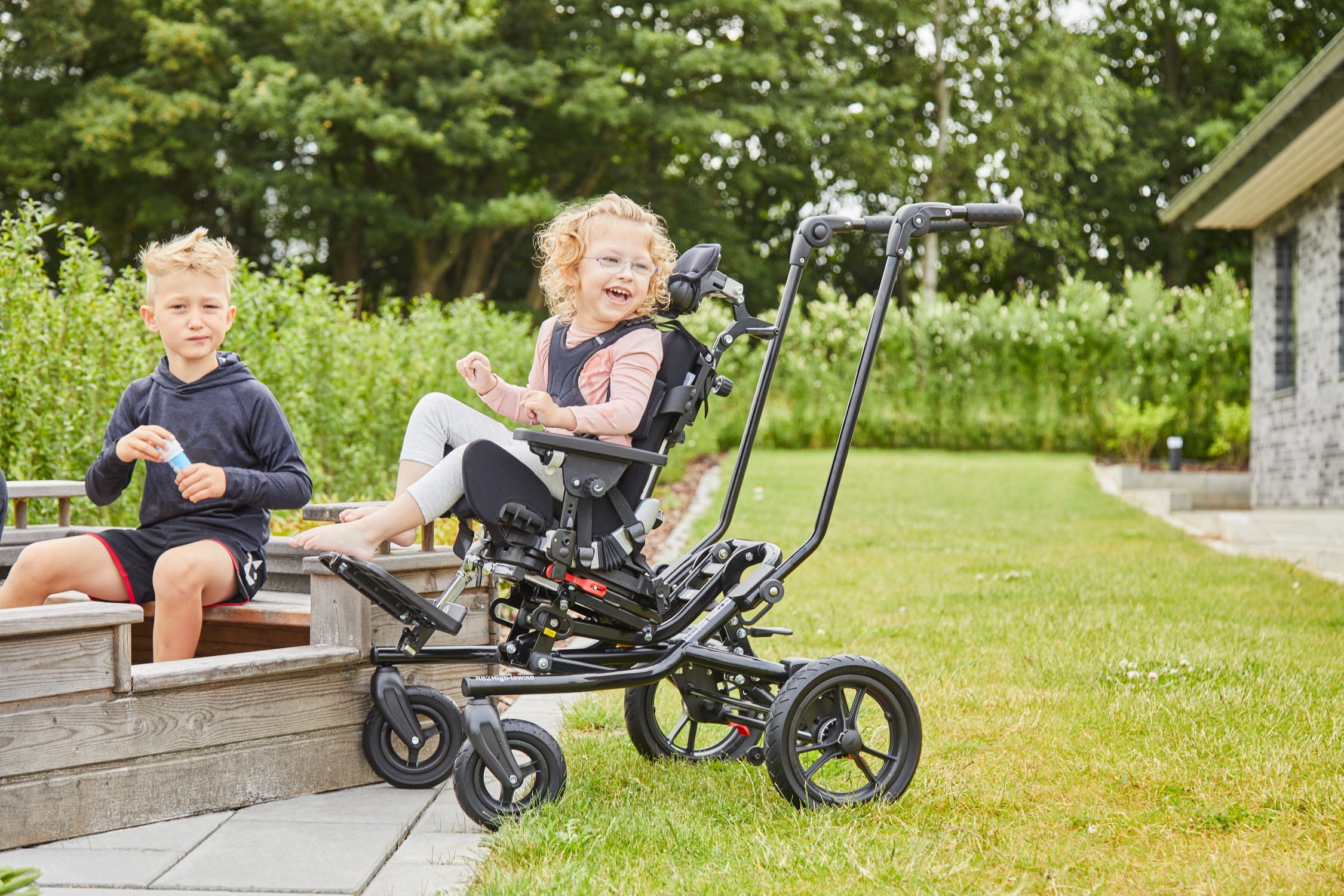
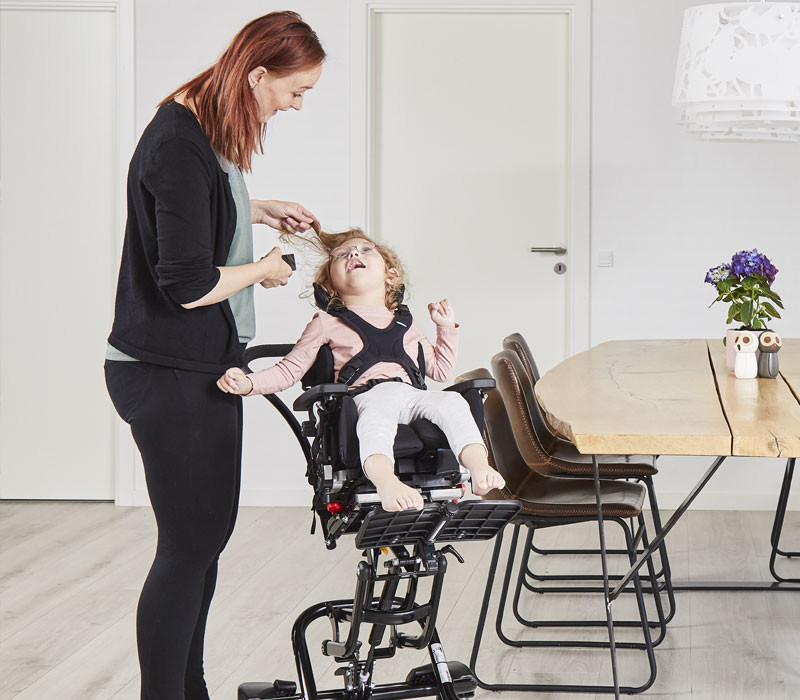

The needs of the user and the possibilities will be the most important when making a clinical decision about medical devices. It is also well accepted that medical devices are of importance to and might impact the caregivers and families. When it comes to the perspectives and priorities of the caregivers, it is very relevant to consider the High-low:xo.
The High-low:xo can be able to contribute to ensure good working conditions for the caregivers. This is done by either lifting the smaller user up to the caregiver or lowering the taller user down to the caregiver.
Examples of activities where positioning of the user can ease the work of the caregiver could be:
- Selfcare: eating and drinking, caring for hair or nails or taking footwear on and off at a height where the caregiver can assist without compromising on work conditions.
- Learning and applying knowledge: reading or writing together at a table height suitable for both the user and the caregiver.
These examples are activities, where it can be relevant to discuss daily routines to ensure that the caregiver priorities are included in the clinical decision making.
By acknowledging family and caregivers as important participants in the clinical decision making, it might be possible to find product solutions that increase activity levels of the user and improve the quality of life for the users and their family or caregivers.
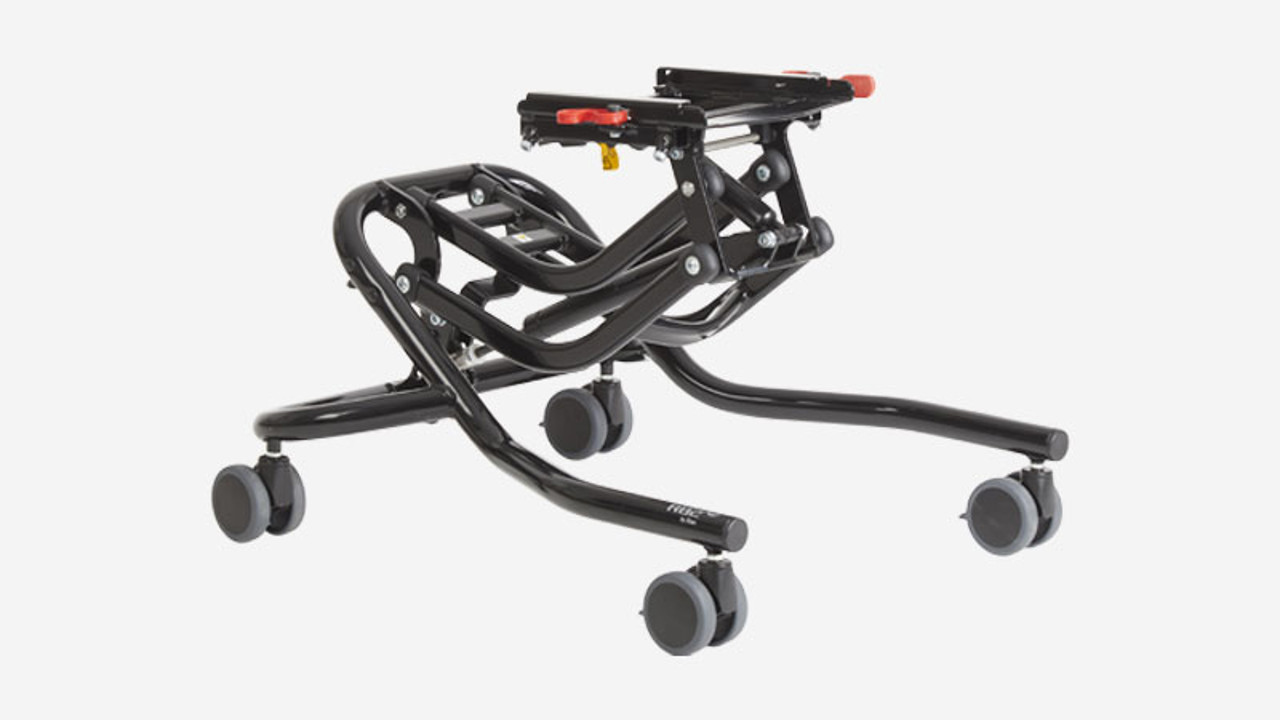
Gas spring
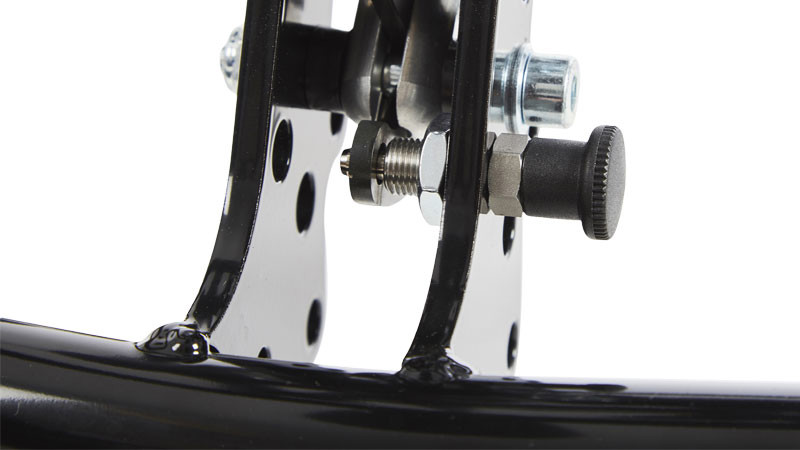
The gas spring is operated using the pedal on the frame or a lever on the push brace. If you want to be able to control the height adjustment, the pedal operated version comes with a user-friendly lock, which allows the caregiver to lock the gas spring in any given position.
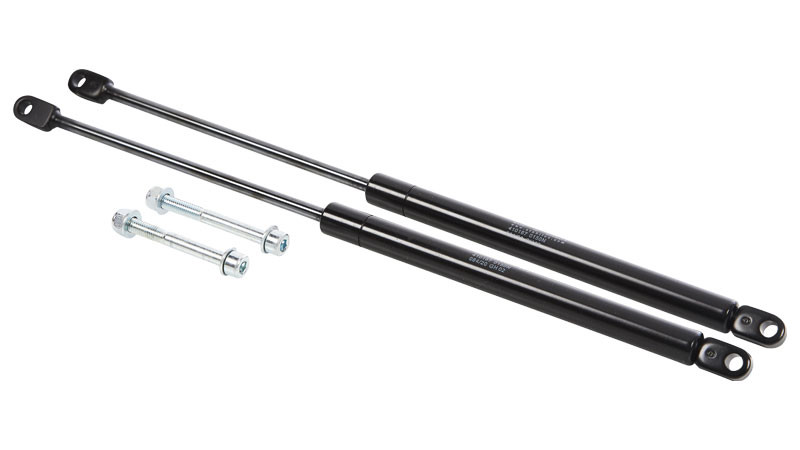
The gas spring height adjustment provide resistance when lowering the High-low:xo. The gas spring conserves the energy until you want the seat to move up again, where the gas is released supporting the movement up. Gas springs is known for providing slow and smooth movements. A single gas spring is excellent for moving medium sized loads up to around 30 kilos. If the High-low:xo frame is used with a larger user, please consider applying extra gas springs, in order to achieve the full benefit of the height adjustment. The gas spring requires a minimum of maintenance.
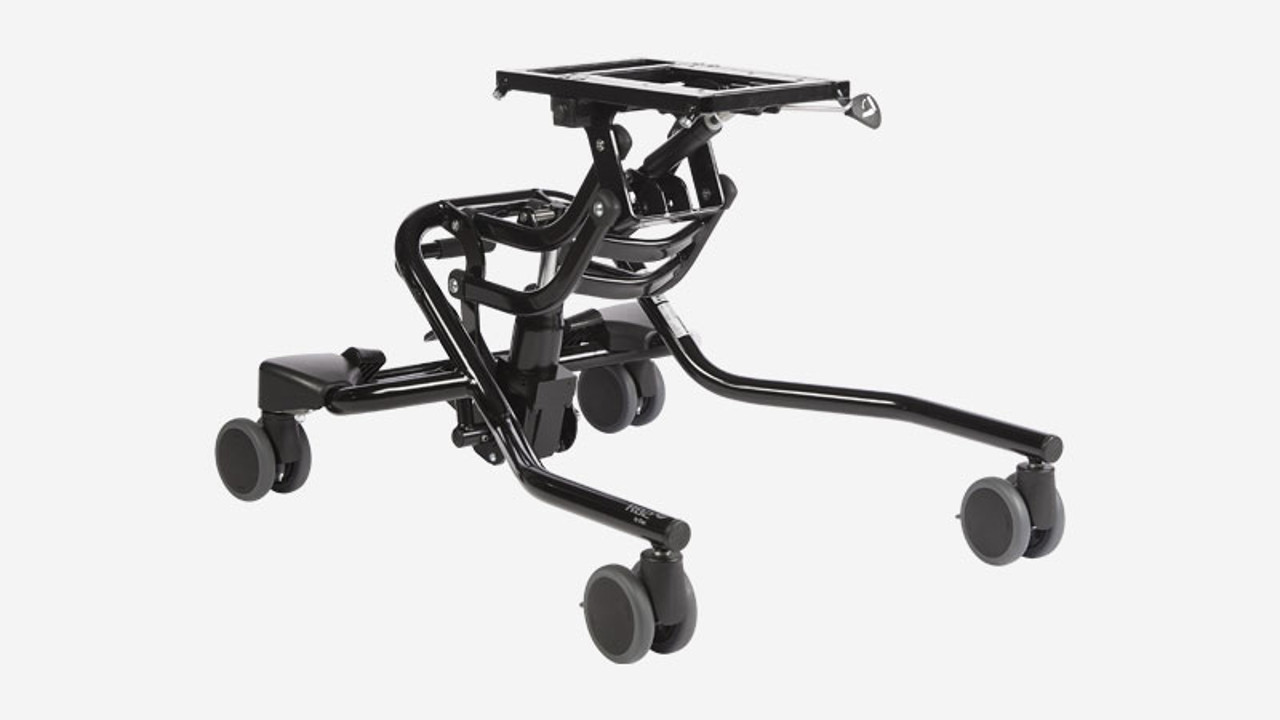
Hydraulic
The hydraulic height adjustment is operated using a pedal on the frame.
The hydraulic system creates a large upward force at a slow speed in steps each time the caregiver pumps the foot pedal using quick movements with relatively low force. The seat is easily lowered again in one smooth movement, when the foot pedal is lifted.
Hydraulic height adjustment is known to be able to move against heavy resistance/loads, like the powered version and with a minimum need for maintenance, like the gas spring.
Power
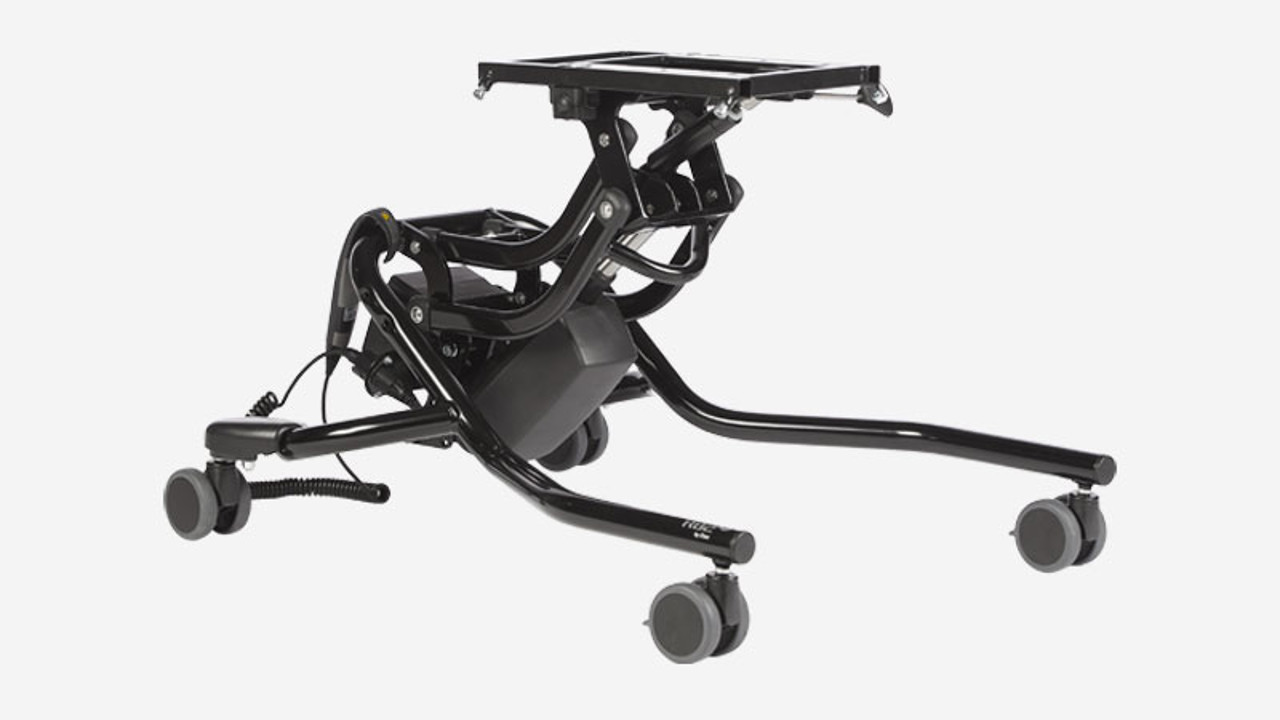
The power actuator for height adjustment is operated using the handset. The handset allows many users to actively participate in the height adjustment.
Power supported height adjustment is known to be strong and move smoothly regardless of the user weight. Making it perfect to use from a few kilos to the maximum user weight.
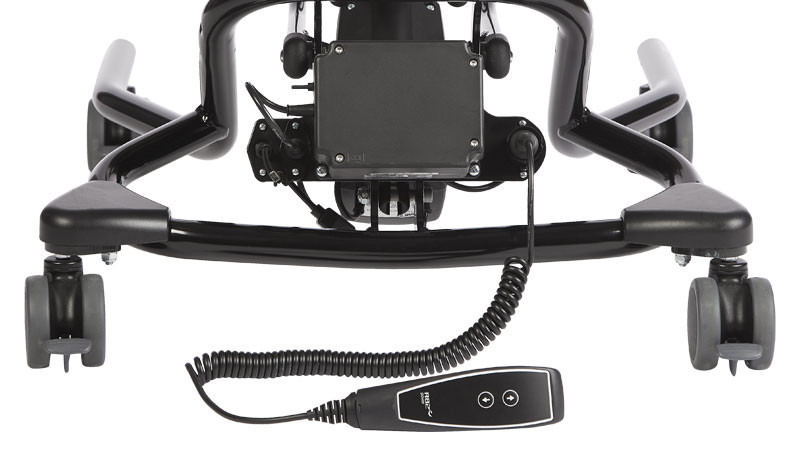
The powered version of the High-low:xo needs to be charged on a regular basis. For an optimum lifetime, the power unit must be charged as often as possible (e.g., Every night). Charging is done easily with a few steps and a light on the charger indicated when the battery is charging (yellow) and when it is fully charged (green).
Lock of height adjustment
How to mount lock of height adjustment on R82 high-low:xo with gas spring height adjustment on the frame.
Extra gas springs
How to mount extra gas springs on R82 high-low:xo with gas spring height adjustment.
How to charge a power frame
How to use the charge function on R82 High-low:xo frame with power height adjustment.